
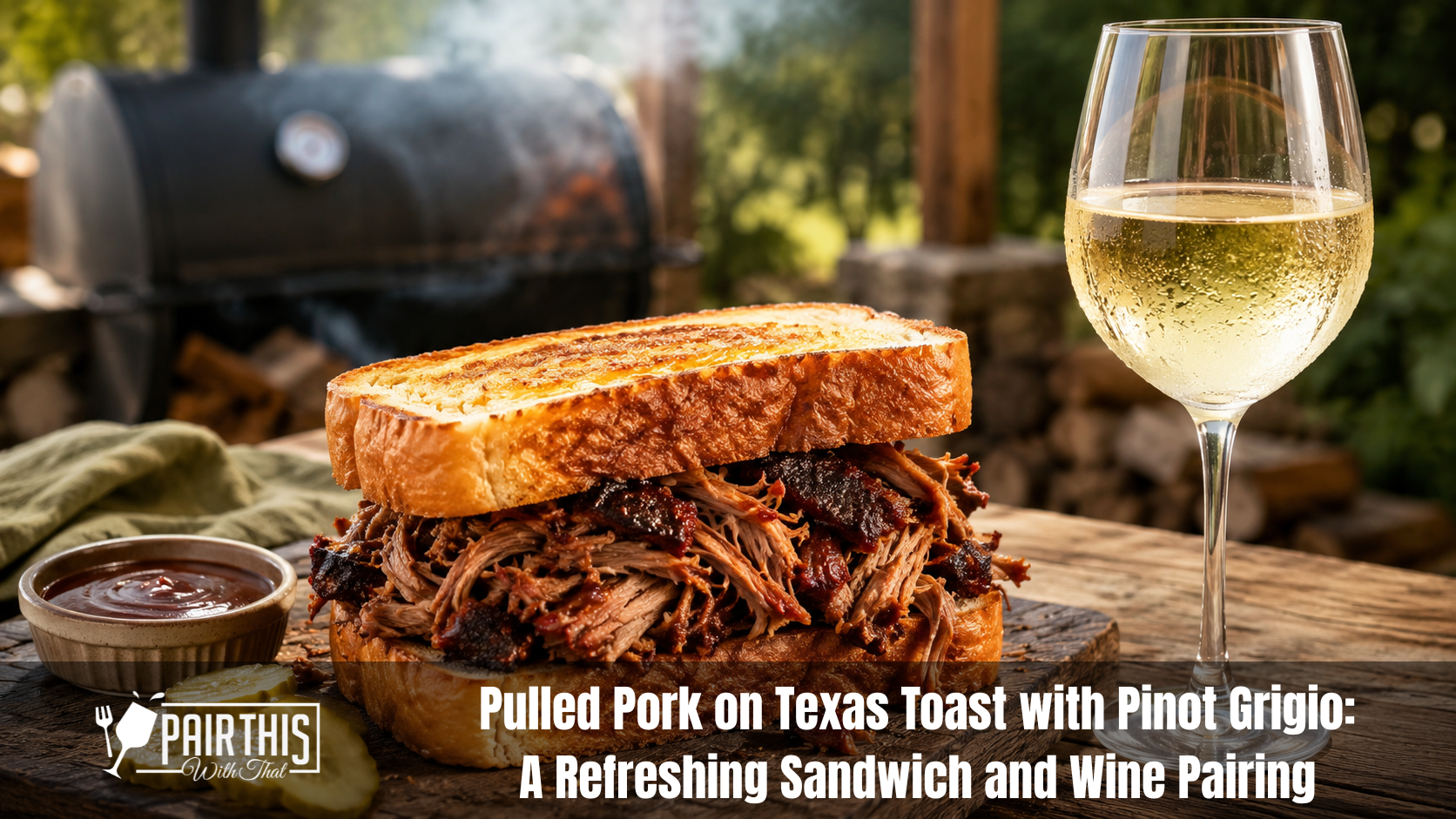
There are few things more satisfying than turning an entire pork butt into a pile of tender, smoky pulled pork.
For my latest National Sandwich Month pairing, I smoked a pork butt low and slow, shredded the meat and piled it onto thick Texas toast. It was rich, smoky, buttery and exactly the kind of sandwich that deserves a place at the barbecue table.
For the pairing, however, I skipped the beer and passed over the big red wines. Instead, I opened an Italian Pinot Grigio.
The crisp, refreshing white wine provided a welcome contrast to the richness of the pork and toast—and showed why lighter wines shouldn’t be overlooked when barbecue is on the menu.
From Pork Butt to Pulled Pork
Pulled pork rewards patience.
Pork butt comes from the upper shoulder of the pig and contains the fat and connective tissue needed for a long cook. When exposed to low heat over several hours, that connective tissue gradually breaks down and the meat becomes tender enough to pull apart.
The smoker also creates one of pulled pork’s best features: the bark.
That dark, flavorful exterior develops from the combination of seasoning, smoke, rendered fat and heat. Once the pork has rested, shredding the bark along with the interior meat distributes those concentrated flavors throughout the finished pile.
It’s tempting to start pulling the pork as soon as it leaves the smoker, but resting matters. It allows the juices to redistribute and gives the meat time to cool just enough to handle without sacrificing moisture.
Once shredded, the pork is ready for sandwiches—or for standing over the pan and eating several “quality-control” bites first.
Why Texas Toast Works
A pulled pork sandwich needs bread with enough structure to support the filling.
Texas toast is cut thicker than standard sandwich bread, which gives it the strength to hold a generous serving of pork. Toasting it adds a crisp exterior, while butter introduces another savory layer that complements the richness of the meat.
The result is a sturdy sandwich with contrasts in both flavor and texture: crisp toast, tender pork, smoky bark and, depending on your choice of toppings, tangy sauce or crunchy slaw.
Of course, all that pork and butter can become rich quickly. That’s where the Pinot Grigio comes in.
Pairing Pinot Grigio with Smoked Pork
Italian Pinot Grigio usually brings crisp acidity, a light body and flavors such as lemon, green apple, pear and citrus. These qualities make it a useful partner for rich barbecue.
The acidity cuts through the fat of the pork and the butter on the Texas toast. Its fresh fruit flavors provide contrast to the savory smoke, while its lighter body allows the flavor of the meat to remain front and center.
That last point is particularly important. After spending hours building smoke and bark on a pork butt, I don’t want a wine that covers those flavors. Pinot Grigio supports the pork by refreshing the palate rather than fighting for attention.
It’s the same reason pickles, vinegar sauce and coleslaw work so well on a pulled pork sandwich. Rich, smoky meat benefits from something bright.
Choose the Sauce Carefully
The sauce can make or break this pairing.
Pinot Grigio works especially well with vinegar-based barbecue sauces, which mirror the wine’s acidity. A tangy mustard sauce can also be successful, particularly if it isn’t overly sweet.
Thick sauces containing lots of brown sugar, molasses or honey present more of a challenge. Sweet food can make a dry wine seem thin or harsh by comparison.
If you prefer a sweeter barbecue sauce, apply it lightly and let the pork provide most of the sandwich’s flavor. You could also look for a slightly riper Pinot Grigio with noticeable pear or stone-fruit notes.
Ways to Customize the Sandwich
The basic combination of pulled pork and Texas toast leaves plenty of room for customization:
- Add vinegar-based coleslaw for crunch and acidity.
- Top the pork with dill pickles or pickled onions.
- Use a peppery vinegar sauce to brighten the meat.
- Add sliced jalapeños for heat.
- Toast the bread on the grill for extra char.
- Brush the toast with garlic butter before grilling.
- Add a small amount of mustard-based barbecue sauce.
If you add significant heat, choose a fruitier Pinot Grigio and avoid an extremely lean or austere bottle. Alcohol can intensify spice, while ripe fruit can help soften it.
The Best BBQ Pairing Isn’t Always the Boldest
Pulled pork is often paired with beer, bourbon or a powerful red wine. All can work, but barbecue doesn’t always need another bold flavor beside it.
This Italian Pinot Grigio succeeded because it did something different. It brought freshness to the pork’s richness, citrus to its smoke and acidity to its fat. Each sip cleared the palate and made the next bite taste as good as the first.
After spending hours smoking a pork butt, the meat should be the main attraction. Sometimes the best wine is simply the one that lets it shine.
Leave a Reply