
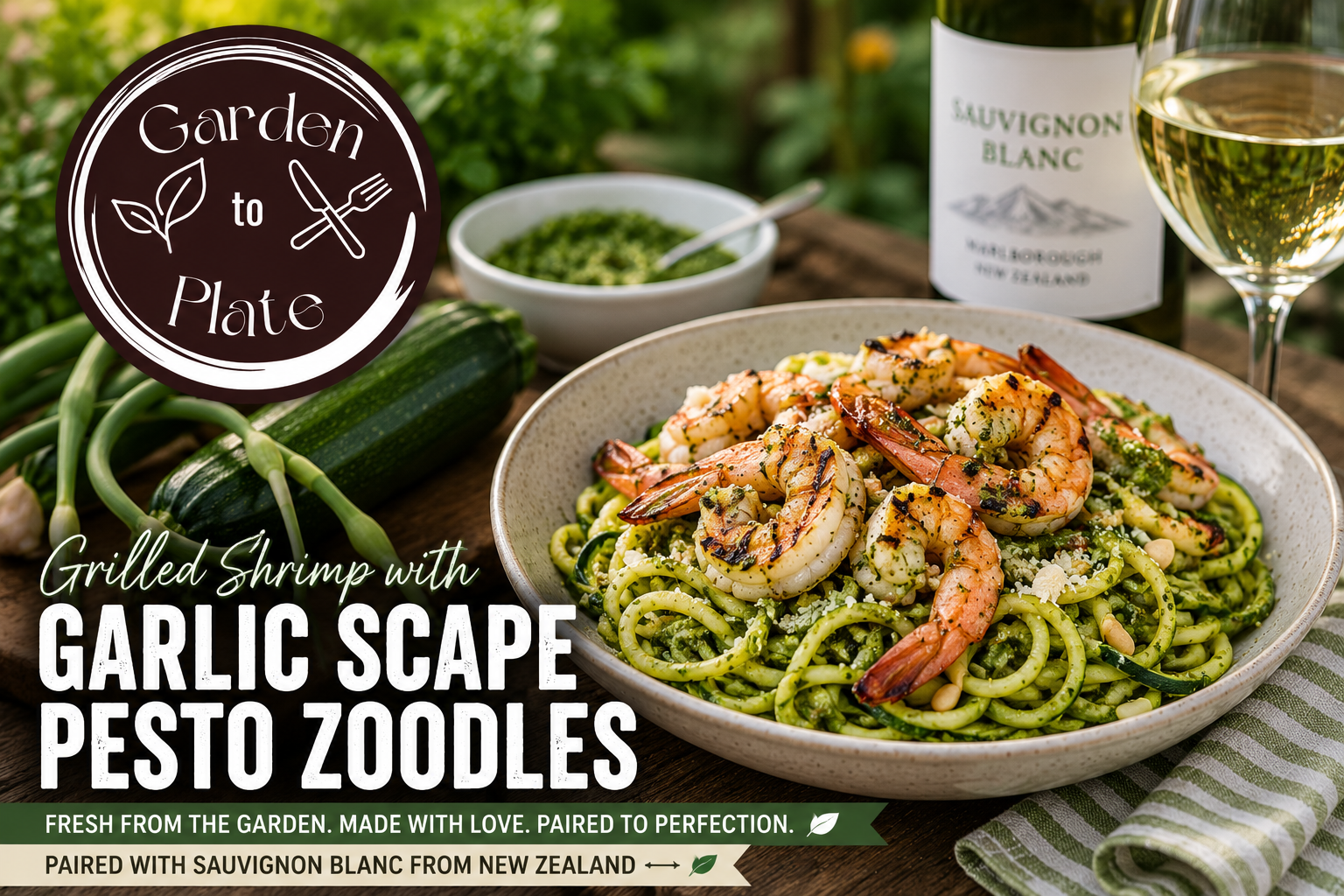
There is something especially satisfying about building a meal around ingredients that were growing in your garden just a short time earlier.
For the latest installment of my Garden to Plate series, I used two fresh ingredients from our garden—garlic scapes and zucchini—to make grilled shrimp with garlic scape pesto “zoodles.” I paired the dish with a New Zealand Sauvignon Blanc for a light, refreshing summer meal.
What Are Garlic Scapes?
Garlic scapes are the long, curling green shoots that grow from hardneck garlic plants. Gardeners typically harvest them before the garlic bulbs are ready, which helps the plant direct more of its energy toward the bulb underground.
They also happen to be delicious.
Garlic scapes have a fresh, mildly garlicky flavor that is less sharp than raw garlic. They can be grilled, sautéed, added to eggs, blended into sauces, or used to make pesto.
For this dish, I turned the scapes into a pesto that brought plenty of fresh garlic flavor without overpowering the shrimp or the wine.
Turning Garden Zucchini into Zoodles
Anyone who grows zucchini knows that once it starts producing, it rarely does so politely. One day you have a small zucchini. The next day, you have enough to feed the neighborhood.
Spiralizing zucchini into noodles is a great way to use some of that harvest while keeping a meal light and fresh. The zoodles provide a neutral base that allows the garlic scape pesto and grilled shrimp to remain the stars of the dish.
The key is not to overcook them. Zucchini contains a lot of water, so a brief sauté is usually enough. You want the noodles tender but still slightly firm rather than soft and watery.
Why Sauvignon Blanc Works with This Dish
I paired the shrimp and pesto zoodles with a Sauvignon Blanc from New Zealand.
New Zealand Sauvignon Blanc is often known for its bright acidity, citrus flavors, tropical fruit, and distinctive herbal character. Those qualities made it a natural match for this dish.
The wine’s acidity helped refresh the palate after each bite of pesto, while its citrus notes worked beautifully with the grilled shrimp. Its green, herbaceous qualities also echoed the fresh flavors of the garlic scapes and zucchini.
This is a good example of pairing similar flavors. The herbal notes in both the wine and the pesto create a connection between the glass and the plate.
At the same time, the wine’s crispness keeps the pairing from feeling heavy.
Pairing Tips
When choosing a wine for grilled shrimp with pesto, look for something with bright acidity and fresh, citrus-driven flavors.
In addition to Sauvignon Blanc, you could try:
- Albariño
- Vermentino
- Grüner Veltliner
- Dry Riesling
- Pinot Grigio
Avoid wines that are heavily oaked or very rich, as they may overwhelm the shrimp and compete with the fresh herbal flavors of the pesto.
From the Garden to the Glass
The goal of the Garden to Plate series is to show how the work we put into the garden during the spring can provide fresh ingredients throughout the summer and beyond.
This dish brought that idea together perfectly. Garlic scapes became a vibrant pesto, zucchini became the base of the meal, and a chilled Sauvignon Blanc completed the experience.
Fresh ingredients do not always require complicated recipes. Sometimes all they need is a little heat, a simple preparation, and the right wine alongside them.
The full recipe for the garlic scape pesto below.
Garlic Scape Pesto
Ingredients
10 (154 grams) Garlic Scapes size of scapes vary, use weight for accurate measurement
1/3 cup (44 grams) Pine Nuts *see notes for substitutes
1/3 cup (38 grams) Parmesan Asiago or Parmesan dice or shredded **see note
1/2 Lemon juiced
1/8 tsp fine sea salt
Pinch of ground pepper
⅓ cup extra virgin olive oil
Instructions
Trim the garlic scapes by cutting just below the bulb and also if the end of the stem seems woody, trim that too (like asparagus). Discard the bulb and end of stem, then set the remaining scape aside (the curly part).
In a food processor, add the scapes, twirling them around the center so that they all fit. Add the pine nuts, cheese, juice of the lemon and salt and pepper. Process by pulsing until the mixture begins to break down. Scrape the bowl down.
With the processor running, slowly add all the olive oil. Continue to process until all the ingredients are incorporated and broken down, about one minute.
Store in a covered container or lidded jar in the fridge and enjoy within a week. Also, you can freeze the pesto in a jar or in an ice-cube tray. Once frozen, in the ice-cube tray, remove and place in a zip top bag in the freezer.